Opening your mailbox to discover a five-figure hospital bill is an experience that leaves a heavy pit in your stomach. I have walked alongside dozens of individuals and families staring at invoices for $15,000, $45,000, or even over $100,000 following an unexpected surgery, an emergency room visit, or a prolonged hospital stay. The panic is immediate, raw, and completely overwhelming.
Here is the truth that hospital billing departments rarely advertise: Medical bills are almost never set in stone. In the United States medical system, the sticker price on a hospital invoice—known as the “chargemaster rate”—is an arbitrary, inflated starting number. It functions much like the MSRP on a car, designed as a benchmark for insurance negotiations rather than what an individual should actually pay out of pocket.
Navigating healthcare expenses requires knowing the right medical debt negotiation tactics to significantly reduce what you owe, protect your credit, and regain control of your financial life. Whether you are dealing with an unpaid bill sitting on your kitchen counter or an account nearing collections, this comprehensive guide provides the step-by-step strategies, exact scripts, and legal protections needed to resolve medical debt.
For broader strategies on managing overall household liabilities, feel free to explore our comprehensive debt relief and payoff guides.
1. Know Your Rights: The Healthcare Landscape
Before making your first phone call to a billing department, it is crucial to understand the rules that govern medical debt. Healthcare billing laws and credit reporting regulations provide key protections for patients.
       ┌──────────────────────────────────────────────────────────┐
       │               YOUR MEDICAL BILLING RIGHTS                │
       └────────────────────────────┬─────────────────────────────┘
                                    │
         ┌──────────────────────────┼──────────────────────────┐
         │                          │                          │
         ▼                          ▼                          ▼
┌──────────────────┐       ┌──────────────────┐       ┌──────────────────┐
│  NO SURPRISES    │       │   SECTION 501(r) │       │   CFPB CREDIT    │
│       ACT        │       │   CHARITY CARE   │       │   PROTECTIONS    │
├──────────────────┤       ├──────────────────┤       ├──────────────────┤
│ Protects against │       │ Non-profits MUST │       │ Medical debts    │
│ unexpected out-  │       │ offer free/low-  │       │ under $500 drop  │
│ of-network care  │       │ cost care to     │       │ off credit       │
│ billing.         │       │ eligible income. │       │ reports.         │
└──────────────────┘       └──────────────────┘       └──────────────────┘
The No Surprises Act
Enacted to protect patients from balance billing, the Federal No Surprises Act protects you when you receive emergency care or non-emergency care from an out-of-network provider at an in-network facility. If you receive an out-of-network surprise bill for emergency services, the hospital cannot bill you more than your in-network cost-sharing amount. You can review detailed rights directly on the Centers for Medicare & Medicaid Services (CMS) No Surprises Page.
CFPB Credit Reporting Rules
The Consumer Financial Protection Bureau (CFPB) enforces rules regarding how medical debt affects consumer credit scores. Paid medical debt must be removed from credit reports entirely. Furthermore, unpaid medical bills under $500 no longer appear on standard credit reports, and major credit bureaus must wait at least 365 days before listing unpaid medical debt above $500. This 1-year grace period gives you time to audit, appeal, and negotiate without destroying your credit score.
Non-Profit Hospital Obligations (Section 501(r))
Over 55% of hospitals in the United States operate as non-profit entities. Under Section 501(r) of the Internal Revenue Code, these hospitals are legally required to maintain a written Financial Assistance Policy (FAP)—commonly referred to as “Charity Care.” If your household income falls below a certain threshold (often 200% to 400% of the Federal Poverty Level), non-profit hospitals are legally mandated to discount or completely forgive your bill.
2. Preparation: Groundwork Before Your First Call
Negotiating medical bills successfully requires careful preparation. Reaching out to a billing representative without proper documentation reduces your leverage. Following a systematic process ensures you are ready to negotiate effectively.
Step 1: Hit the Pause Button
Do not panic, and do not pay the bill immediately using high-interest credit cards or retirement savings. Unless you risk missing a formal, written charity care deadline, medical bills do not go to collections overnight. You have time to audit, organize, and plan your strategy.
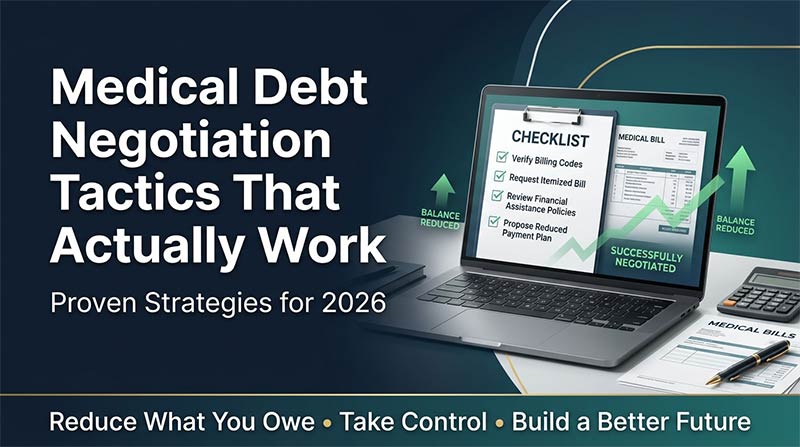
Step 2: Request an Itemized Bill with CPT Codes
A summary bill that simply states “Pharmacy: $4,200” or “Lab Services: $1,850” is insufficient for evaluation. Call the provider’s billing department and request a detailed, itemized bill featuring standard medical coding:
- CPT (Current Procedural Terminology) codes or HCPCS codes for procedures.
- ICD-10 codes for diagnoses.
- An line-by-line itemization of supplies, medications, and practitioner fees.
Pro Tip: Requesting an itemized statement often triggers an internal review by the hospital, which can lead to automatic corrections of common billing errors before you even begin negotiating.
Step 3: Audit for Billing Errors
Medical billing is notoriously prone to mistakes. Studies consistently show that up to 80% of medical bills contain billing errors. Carefully review your itemized statement for the following common issues:
- Duplicate Billing: Being charged twice for the same blood draw, X-ray, or medication.
- Unbundling: Charging separately for tests or supplies that should be billed under a single, comprehensive procedure code.
- Upcoding: Being billed for a higher level of service or more complex procedure than was actually provided (e.g., being billed for a Level 5 ER visit when you were treated for a routine sprain).
- Cancelled Services: Charges for medications, IVs, or lab work ordered by a physician but never actually administered.
Step 4: Benchmark Fair Market Rates
Once you have the CPT codes, determine what the procedure actually costs in your geographic region. Providers routinely charge uninsured or out-of-network patients 300% to 1,000% of what Medicare pays for the exact same service.
Use free healthcare price comparison tools like Healthcare Bluebook or FAIR Health Consumer to look up the “Fair Market Value” or “Allowed Amount” for your CPT codes. Armed with this data, you can ground your negotiation in objective market rates rather than inflated hospital charges.
3. Core Medical Debt Negotiation Tactics
With an itemized bill, market price benchmarks, and financial documentation ready, you can apply these proven medical debt negotiation tactics to reduce what you owe.
+-----------------------------------------------------------------------+
|                 5 CORE MEDICAL DEBT NEGOTIATION TACTICS               |
+-----------------------------------------------------------------------+
| 1. Itemized Audit      -> Eliminate billing errors, upcoding, & dupes |
| 2. Charity Care (501r) -> Waive 50% to 100% based on income           |
| 3. Rate Matching       -> Offer to pay standard Medicare/Market rates |
| 4. Cash Settlement     -> Pay 30%-50% lump sum to close balance        |
| 5. Extended Plan       -> 0% interest monthly plan scaled to budget   |
+-----------------------------------------------------------------------+
Tactic 1: Apply for Hospital Charity Care
Before asking for a generic discount, check if you qualify for charity care. This should always be your first step when dealing with hospital bills.
- Search the hospital’s website for “Financial Assistance Policy” or “Charity Care Application.”
- If you cannot find it, non-profit organizations like Dollar For provide free tools to help patients determine eligibility and submit applications.
- Charity care applies retroactively in many cases—even if your bill has already been sent to an internal collections department (typically up to 240 days after the first post-discharge statement).
- Eligibility: Many hospitals offer 100% debt forgiveness for households earning up to 200% of the Federal Poverty Level (FPL) and sliding-scale discounts for households earning up to 400% FPL.
Tactic 2: Negotiate Down to the Medicare or Fair Market Rate
If you do not qualify for financial assistance based on income, leverage your price benchmarking data.
Hospitals accept Medicare reimbursement rates daily, which are significantly lower than chargemaster rates. Call the billing department and explain that you are paying out of pocket. Offer to pay 110% to 125% of the Medicare rate or the local Fair Market Value.
Example: If a hospital bills $8,000 for a CT scan, but Medicare’s allowable rate in your zip code is $650, you can explain that you are willing to pay $750 immediately to resolve the account balance.
Tactic 3: Offer a Lump-Sum Cash Settlement
Hospitals and medical groups spend significant resources attempting to collect long-overdue debts. If you have access to a lump sum—whether through savings, emergency funds, or side earnings—you can offer a one-time cash payment in exchange for settling the debt in full.
Start by offering 25% to 30% of the total balance. Be prepared to negotiate, but avoid agreeing to pay more than 50% of the original bill.
Always state: “I am dealing with financial hardship, but I can secure a one-time payment of $1,200 today if you agree to accept it as payment in full and zero out my balance.”
If you need strategies to build up a cash reserve for a lump-sum settlement offer, review our guide on practical side income ideas.
Tactic 4: Set Up a 0% Interest Extended Payment Plan
If a lump-sum settlement is not feasible, request an extended payment plan directly with the hospital or provider.
- Never pay interest: Medical providers are healthcare institutions, not commercial lenders. Almost all hospital systems offer 0% interest payment plans.
- Define the monthly amount based on your budget: Do not let the billing agent dictate a monthly payment you cannot afford. If they demand $300/month but your budget only allows $50/month, clearly state: “My current budget allows for $50 per month. I am committed to making this payment consistently, but I cannot exceed this amount.”
- As long as you make regular, agreed-upon monthly payments, the account remains in good standing and will not be referred to collections agencies.
Tactic 5: Leverage “Self-Pay” or Prompt-Pay Discounts
If you are insured but facing a massive deductible, ask the hospital what the bill would cost if processed under their uninsured or self-pay fee schedule.
In some cases, a hospital’s self-pay rate is lower than the negotiated rate with insurance plans. You can ask the hospital to void the insurance claim and allow you to pay the self-pay rate directly.
Note: If you choose this path, the amount paid will generally not count toward your health insurance annual deductible or out-of-pocket maximum.
4. Communication Tactics: Managing Hospitals, Collectors, and Insurers
The approach you take depends heavily on who currently holds your debt. Negotiating with an in-house hospital billing clerk requires a different strategy than dealing with a third-party debt collector or an insurance claims adjuster.
               ┌───────────────────────────────────────────────┐
               │         WHOM ARE YOU NEGOTIATING WITH?        │
               └───────────────────────┬───────────────────────┘
                                       │
         ┌─────────────────────────────┼─────────────────────────────┐
         │                             │                             │
         ▼                             ▼                             ▼
┌──────────────────┐          ┌──────────────────┐          ┌──────────────────┐
│ HOSPITAL BILLING │          │ INSURANCE COMPANY│          │ DEBT COLLECTION  │
├──────────────────┤          ├──────────────────┤          ├──────────────────┤
│ Focus: Charity   │          │ Focus: Appeals,  │          │ Focus: Debt      │
│ care, prompt-pay │          │ coding errors,   │          │ validation,      │
│ discounts, 0%    │          │ medical necessity│          │ lump-sum cash    │
│ payment plans.   │          │ documentation.   │          │ settlements.     │
└──────────────────┘          └──────────────────┘          └──────────────────┘
1. Communicating with Hospital Billing Departments
Hospital representatives are generally constrained by internal administrative protocols. Treat them with kindness, respect, and patience—they handle frustrated callers all day, and a cooperative attitude can help earn their support.
- Ask for a Manager or Patient Advocate: If a frontline customer service representative states they lack the authority to grant discounts above 10%, politely ask to speak with a supervisor, billing manager, or financial counselor.
- Keep Detailed Records: Maintain a dedicated call log noting the date, time, full name of every representative, call reference numbers, and specific details agreed upon during the conversation.
2. Communicating with Health Insurance Companies
If a bill was denied by your insurance provider, the problem may stem from a processing error rather than a genuine lack of coverage.
- Review your Explanation of Benefits (EOB): Match the EOB with your hospital invoice. Look for denial reason codes such as “Not Medically Necessary,” “Prior Authorization Missing,” or “Timely Filing Expired.”
- File a Formal Appeal: Work with your doctor’s office to submit a Letter of Medical Necessity. Physicians regularly assist with insurance appeals to secure proper coverage for their patients.
3. Communicating with Debt Collection Agencies
If your medical bill has been transferred or sold to a third-party debt collector, your strategy must pivot to legal verification and debt validation.
- Demand Written Debt Validation: Under the Fair Debt Collection Practices Act (FDCPA), you have the legal right to request a formal Debt Validation Letter within 30 days of initial contact. Require the agency to prove that you owe the debt, that the amount is accurate, and that they are legally licensed to collect it in your state.
- Never Admit Ownership Verbally: Avoid stating “I know I owe this money” on recorded phone lines. Instead, say: “I am reviewing this alleged debt and verifying all records.”
- Negotiate Deep Settlement Discounts: Collection agencies purchase debt portfolios for pennies on the dollar or take high commission percentages. Consequently, they are often willing to settle accounts for 20% to 40% of the face value.
- Get Everything in Writing: Never send funds to a collection agency until you receive a formal, signed agreement stating that the agreed payment settles the account balance in full.
For further advice on managing collections and repairing impacted credit profiles, check out our guide on personal finance management strategies.
5. Sample Negotiation Scripts
Having clear scripts prepared helps you remain calm and confident during phone calls. Below are field-tested templates designed for common medical debt scenarios.
Script A: Requesting Charity Care or Financial Assistance
You: “Hello, my name is [Your Name], and my account number is [Account Number]. I received a bill for $[Amount] regarding my care on [Date]. Due to recent financial difficulty, I am unable to pay this amount. I would like to apply for your hospital’s Financial Assistance or Charity Care program under Section 501(r). Could you please send me the application form and temporarily hold my account so it does not accrue late fees or proceed to collections while my application is under review?”
Script B: Proposing a Lump-Sum Settlement (Hospital or Collector)
You: “I am calling regarding account [Account Number], which has a total balance of $[Total Amount]. I cannot afford this total, but I am attempting to clear my outstanding accounts. I can offer a one-time lump-sum payment of $[Offer Amount, e.g., 30-40% of total] today if you can accept that amount as payment in full and zero out the remaining balance. If we agree on this amount, please send me written confirmation via email or mail before I issue payment.”
Script C: Negotiating Based on Fair Market Value
You: “I am reviewing my itemized invoice for CPT Code [Code Number]. The charge listed on my statement is $[Invoiced Amount]. According to regional market benchmarks and standard Medicare reimbursement rates for this zip code, the fair value for this service is approximately $[Fair Value Amount]. I am self-paying for this care and would like to adjust this line item to match the regional rate of $[Fair Value Amount]. Once adjusted, I am ready to set up an affordable payment plan.”
6. Negotiation Tactics Comparison Matrix
To help you decide which approach best suits your circumstances, the table below breaks down each strategy by potential savings, effort required, and optimal timing.
| Negotiation Strategy | Best Used For | Potential Savings | Effort & Difficulty | Key Action Step |
| Charity Care (501r) | Uninsured or lower-to-middle income households at non-profit hospitals. | 50% – 100% | Moderate (Requires income docs, tax forms, W-2s). | Submit formal Financial Assistance application before the 240-day post-charge window closes. |
| Itemized Audit & Coding Check | Complex hospital stays, ER visits, or bills with vague charges. | 10% – 30% | Low to Moderate (Requires analyzing line items & CPT codes). | Call provider to request an itemized bill showing CPT/HCPCS codes and audit for errors. |
| Fair Market Rate Matching | Uninsured or out-of-network patients who exceed charity care income limits. | 40% – 70% | Moderate (Requires researching Medicare/FAIR Health pricing). | Present local Medicare/Fair Market rates to the billing manager and request a price match. |
| Lump-Sum Cash Settlement | Delinquent accounts, older bills, or accounts in collections. | 50% – 80% | Low (Requires available liquid cash reserve). | Offer a 30% cash payment to settle the balance in full, and confirm agreement in writing. |
| 0% Extended Payment Plan | Patients who cannot secure a lump sum but have stable monthly income. | 0% – 15% (Prevents interest/penalties) | Low (Simple administrative setup). | Propose an affordable monthly payment (e.g., $25–$50/month) aligned with your personal budget. |
7. When to Involve Professionals
While many medical bills can be negotiated independently, certain complex situations warrant working with an expert.
┌─────────────────────────────────────────────────────────────────┐
│              WHEN TO CONSIDER PROFESSIONAL SUPPORT              │
├─────────────────────────────────────────────────────────────────┤
│ • Medical Bill Exceeds $10,000 with Complex Coding              │
│   --> Hire a Certified Medical Billing Advocate                 │
│                                                                 │
│ • Multiple Debt Accounts & Overwhelming Finances                │
│   --> Consult an NFCC-Certified Non-Profit Credit Counselor    │
│                                                                 │
│ • Legal Threat, Wage Garnishment, or Extreme Debt (>50% Income) │
│   --> Speak with a Qualified Consumer Bankruptcy Attorney       │
└─────────────────────────────────────────────────────────────────┘
Certified Medical Billing Advocates
If you are managing a complex medical condition or facing bills exceeding $10,000 with intricate coding across multiple providers, consider hiring a professional Medical Billing Advocate.
Advocates analyze medical records, identify billing fraud or errors, handle insurance appeals, and negotiate directly with hospital managers on your behalf. Organizations like the Patient Advocate Foundation provide free or low-cost advocacy services to eligible patients. Private advocates typically charge an hourly rate or a contingency fee based on a percentage of the total money saved.
Non-Profit Credit Counseling
If medical debt is part of a broader financial challenge involving credit cards, personal loans, or general living expenses, contact a non-profit credit counseling agency affiliated with the National Foundation for Credit Counseling (NFCC). Certified counselors can evaluate your overall budget, help set up debt management plans, and provide structured guidance without charging high fees.
Consumer Legal Help & Bankruptcy Counsel
If a collection agency files a lawsuit against you, or if your total medical liabilities far exceed your annual gross income with no clear path to resolution, schedule a consultation with a consumer protection attorney or bankruptcy lawyer. Chapter 7 or Chapter 13 bankruptcy completely discharges qualifying medical debt, offering a fresh legal start when other options are exhausted.
8. 6 Critical Mistakes to Avoid
Through my years advising individuals on managing debt, I have seen patients make understandable but costly mistakes during the negotiation process. Steer clear of these common pitfalls:
- Putting Medical Debt on Commercial Credit CardsUnpaid medical debt carries distinct legal protections, flexible payment terms, and credit reporting grace periods. As soon as you transfer that balance onto a commercial credit card, it transforms into high-interest consumer debt carrying 20% to 30% APRs—stripping away your legal protections and leverage.
- Draining Retirement Accounts EarlyDraining a 401(k) or IRA to pay off medical bills triggers income taxes and early withdrawal penalties. Furthermore, ERISA-qualified retirement accounts are legally protected from creditors and medical bill collectors under federal law.
- Paying Without Written ConfirmationNever send a lump-sum payment based solely on a verbal promise over the phone. If a collector or billing clerk promises to settle your $5,000 debt for $1,500, require them to send a formal agreement on company letterhead stating that the payment satisfies the debt in full.
- Ignoring Collection NoticesIgnoring calls and letters will not make medical debt disappear. Failure to respond can result in default judgments, bank levies, or wage garnishments depending on state laws. Even if you cannot afford to pay, maintain open communication lines to state your financial situation.
- Assuming Insurance Denials Are FinalOver 50% of initial insurance claim denials are never appealed by patients, despite a significant portion of formal internal appeals resulting in reversed decisions. Always demand clarification for denials and file an official appeal with supporting documentation from your physician.
- Neglecting State-Specific ProtectionsMany states have passed laws that expand protections beyond federal requirements—such as lower income limits for mandatory charity care, caps on medical debt interest rates, or complete bans on home liens for healthcare debt. Research your state attorney general’s website to understand your local consumer rights.
Take Action and Reclaim Your Financial Peace
Facing large medical bills can be mentally and emotionally draining, but it is important to remember that a hospital invoice is simply a starting point for discussion. Healthcare billing systems are complex, flawed, and often intimidating, but as a consumer, you have clear rights, leverage, and resources to advocate for yourself.
Take control of your situation by following a structured plan:
- Stop immediate payments and gather all your documentation.
- Request a detailed itemized statement containing full CPT codes.
- Review your eligibility for Charity Care under Section 501(r) regulations.
- Audit your statement for billing errors and benchmark regional pricing using market data.
- Use clear, structured scripts to negotiate discounts, lump-sum settlements, or interest-free payment terms.
Persistence is key when negotiating medical debt. You may need to make multiple phone calls, speak with supervisors, and resubmit paperwork, but the potential savings make the effort worthwhile.
For additional practical resources, step-by-step guides, and strategies for managing debt and building long-term financial security, explore our complete library of articles at www.cashing.top.

Want to Make Money From Home ?
Join 55,000+ real, remote ways to make money every week.
Good luck! I hope you find the perfect remote opportunity for your lifestyle and goals.
Disclaimer and Risk Warning
Risk Warning: All forms of financial investment—including traditional public stocks, foreign exchange trading, digital real estate crowdfunding, and alternative trust investments—carry inherent risks, including the potential loss of your entire initial principal. Payout yields, dividend distributions, and platform interest rates are never legally guaranteed and can be reduced, frozen, or entirely dissolved at any time without warning. Past performance does not serve as a reliable indicator of future market movements. Always perform meticulous independent due diligence or consult with a certified, fiduciary financial advisor before deploying capital into any market.
Financial Disclaimer: The content published on this page is intended solely for educational, informational, and editorial purposes and does not constitute formal financial, legal, tax, or investment advice. The financial thresholds, metrics, and strategies outlined are generalized guidelines and may not align with your specific financial goals, time horizons, or personal risk tolerances.