When you make the leap from traditional employment to working for yourself, the trade-offs become clear very quickly. You gain autonomy, complete control over your schedule, and uncapped earning potential. But you also lose the corporate safety net—most notably, the company-sponsored retirement plan, the automatic payroll deduction, and the coveted 4% or 6% employer match.
For freelancers, solopreneurs, and independent contractors, there is no HR department sending reminder emails about open enrollment. No default pension scheme automatically stashing away a percentage of your monthly income. Every single dollar of your future financial security rests entirely on your shoulders.
This dynamic creates a widespread crisis among self-employed workers. According to industry data, nearly 40% of freelancers do not consistently save for retirement, often assuming that traditional pensions don’t apply to them or feeling overwhelmed by the alphabet soup of self-employed accounts. Many rely on the dangerous assumption that they will simply “work forever” or eventually sell their business for a windfall.
However, building a private pension system is not only achievable—it is one of the most tax-efficient moves a self-employed business owner can make. Modern pension alternatives for self-employed individuals offer higher contribution ceilings, greater investment flexibility, and more potent tax deductions than standard corporate 401(k) plans.
In this comprehensive guide, we will break down the top retirement options for self-employed workers in 2026, analyze updated contribution limits, evaluate tax strategies, and present a practical framework to build your custom retirement engine—even with unpredictable monthly income.
Why Self-Employed Workers Need Dedicated Retirement Strategies
Traditional workplace pensions and corporate 401(k) plans are engineered around predictability. They rely on steady, biweekly paychecks and standardized employer contributions. As a freelancer or solopreneur, your cash flow is inherently cyclical. You might invoice $20,000 in a banner month like October and struggle to collect $3,000 in January.
Attempting to fit an irregular freelance income into a rigid, traditional pension framework often leads to total inaction. When income drops, fixed monthly contributions get canceled—and they rarely get restarted when revenue recovers.
[ Unpredictable Cash Flow ] ---> [ Avoids Rigid Plans ] ---> [ $0 Saved ]
         │
         ▼
[ Flexible Self-Employed Plan ] ---> [ Percentage-Based Saving ] ---> [ Tax-Deducted Wealth ]
Beyond cash flow volatility, self-employed workers face a unique tax burden that makes tax-deferred retirement accounts essential: Self-Employment (SE) Tax.
When you work as a W-2 employee, your employer pays 7.65% toward Social Security and Medicare taxes, while you pay the remaining 7.65%. When you are self-employed, you pay both halves—a combined 15.3% FICA tax on your net business earnings, on top of federal and state income taxes.
W-2 Employee Tax Split:   [ Employee: 7.65% ] + [ Employer: 7.65% ] = 15.3% FICA
Self-Employed Tax Burden: [ You Pay Full 15.3% Self-Employment Tax ] + Income Taxes
By leveraging dedicated self-employed pension alternatives in 2026, you can directly reduce your Adjusted Gross Income (AGI). Every dollar you contribute to a pre-tax Solo 401(k) or SEP IRA reduces your overall taxable income, effectively yielding an instant, guaranteed return equal to your marginal tax bracket.
The Cost of Delay: A Real-World Compounding Example
To understand why establishing a plan today is critical, consider two 30-year-old freelancers, Alex and Maya:
- Alex waits until age 40 to begin saving, but aggressively puts away $15,000 per year until age 65 (25 years total). Total out-of-pocket contributions: $375,000.
- Maya starts immediately at age 30, contributing $7,500 per year for 15 years, then stops entirely at age 45, letting the money compound untouched until age 65. Total out-of-pocket contributions: $112,500.
Assuming an average annual return of 7%:
- Alex’s Portfolio at Age 65: ~$948,000
- Maya’s Portfolio at Age 65: ~$1,041,000
Maya invested less than one-third of the cash Alex did, yet ended up with nearly $100,000 more at retirement simply because she started ten years earlier. For independent workers, time in the market is your greatest asset.
For a broader foundation on managing variable cash flow, review our comprehensive self-employed finances guide to establish a solid business budgeting baseline before allocating capital.
Top Pension Alternatives for Self-Employed Workers in 2026
When evaluating the best retirement plans for freelancers, there is no single “best” account. The optimal choice depends on your net income, whether you have employees, your business structure (Sole Proprietorship, LLC, or S-Corp), and how much administrative oversight you are willing to manage.
                       ┌─────────────────────────────────────────┐
                       │  Which Plan Fits Your Income & Goals?   │
                       └────────────────────┬────────────────────┘
                                            │
                    ┌───────────────────────┴───────────────────────┐
                    ▼                                               ▼
          [ Net Income < $50k ]                           [ Net Income $70k+ ]
                    │                                               │
          ┌─────────┴─────────┐                           ┌─────────┴─────────┐
          ▼                   ▼                           ▼                   ▼
    [ Traditional/      [ SEP IRA ]                 [ Solo 401(k) ]    [ Backdoor Roth ]
      Roth IRA ]      (Low admin)                   (Max limits)       (Tax-free growth)
1. The Solo 401(k) (Individual 401k): The High-Earner’s Wealth Accelerator
The Solo 401(k)—also known as an Individual 401(k) or One-Participant 401(k)—is arguably the most powerful retirement vehicle available to self-employed individuals who have no full-time employees (other than a spouse).
How It Works
The unique advantage of a Solo 401(k) is that you wear two hats: you are both the employee and the employer. This allows you to make contributions in two separate categories up to a generous annual aggregate ceiling.
- As the Employee (Elective Deferral): You can contribute up to 100% of your earned income up to the employee limit.
- As the Employer (Profit Sharing): You can make an additional profit-sharing contribution of up to 25% of your W-2 wages (if structured as an S-Corp) or approximately 20% of net self-employment earnings (if filing Schedule C as a sole proprietor or single-member LLC).
2026 Contribution Limits
- Employee Elective Deferral Limit: $24,500 (up from $23,500 in 2025).
- Catch-Up Contribution (Ages 50–59 & 64+): Additional $8,000, bringing the employee limit to $32,500.
- SECURE 2.0 Enhanced Catch-Up (Ages 60–63): Under SECURE 2.0 provisions, individuals aged 60 to 63 can make an enhanced catch-up contribution of $11,250, bringing their total employee deferral limit to $35,750.
- Overall Maximum Contribution Ceiling (Combined Employee + Employer): $72,000 for savers under 50 (up from $70,000 in 2025). Total potential limit reaches $80,000 for age 50–59/64+ or $83,250 for age 60–63.
Tax Treatment Options
- Traditional Solo 401(k): Contributions are pre-tax, reducing current-year income taxes. Withdrawals in retirement are taxed as ordinary income.
- Roth Solo 401(k): Employee deferrals are made with after-tax dollars. Investments grow 100% tax-free, and qualified withdrawals after age 59½ are completely tax-free.
Key Advantages
- Supercharged Front-Loading: Even if your net self-employment income is $30,000, you can shelter $24,500 as an employee deferral. A SEP IRA would require earning over $120,000 to save that same amount.
- Roth Flexibility: Allows employee deferrals to be designated as Roth, regardless of how high your income is.
- Participant Loans: Most custom Solo 401(k) providers allow you to borrow up to 50% of your account balance (up to a $50,000 maximum) tax-free and penalty-free for business or personal emergency liquidity.
- Spouse Inclusion: If your spouse earns income from the business, they can participate as an employee, effectively doubling your household contribution capacity to $144,000+ per year.
Potential Drawbacks
- Administrative Deadline: To make contributions for a tax year, the plan MUST be legally established by December 31 of that tax year (though contributions can be deposited up to your tax filing deadline, including extensions).
- IRS Form 5500-EZ Requirement: Once your total plan assets across all accounts exceed $250,000, you must file an annual informational report (Form 5500-EZ) with the IRS.
- No Full-Time Employees: If you hire W-2 staff who work more than 1,000 hours per year, you can no longer maintain a Solo 401(k) and must transition to a standard company 401(k).
Best Suited For: Mid-to-high earning freelancers, consultants, and solopreneurs ($70,000+ net income) with no W-2 staff who want to maximize tax deductions or Roth contributions.
2. The SEP IRA: Ultimate Flexibility for Variable Earnings
The Simplified Employee Pension (SEP) IRA has long been a staple among pension options for solopreneurs due to its unmatched administrative simplicity.
                 ┌──────────────────────────────────────┐
                 │       SEP IRA vs. SOLO 401(k)       │
                 └──────────────────┬───────────────────┘
                                    │
           ┌────────────────────────┴────────────────────────┐
           ▼                                                 ▼
[ SEP IRA: Employer Only ]                        [ Solo 401(k): Dual Role ]
  • Max ~20% of net profit                          • Employee deferral ($24,500)
  • Single contribution bucket                      • Plus ~20% Employer profit share
  • $0 admin / setup anytime                        • Higher savings at lower incomes
How It Works
In a SEP IRA, contributions are treated strictly as employer contributions. You cannot make individual “employee deferrals” into a SEP IRA.
Contributions are calculated as a flat percentage of your net self-employment income (after subtracting half of your self-employment tax and business expenses).
2026 Contribution Limits
- Maximum Contribution Ceiling: Up to 25% of compensation (which works out to 20% of net earnings for Schedule C sole proprietors), up to a maximum of $72,000 for 2026.
- No Catch-Up Contributions: Unlike 401(k)s or personal IRAs, standard SEP IRAs do not offer catch-up provisions for individuals over 50.
Tax Treatment
Contributions are pre-tax and tax-deductible. Investments grow tax-deferred until drawn down in retirement.
Key Advantages
- Zero Administrative Overhead: Takes less than 10 minutes to set up online with brokers like Fidelity, Vanguard, or Charles Schwab. No annual IRS filings (no Form 5500 required).
- Flexible Deadlines: You can establish and fund a SEP IRA as late as your tax filing deadline—including extensions. For example, a 2026 SEP IRA can be opened and funded until October 15, 2027 if you file an extension.
- Total Contribution Discretion: You are never locked into a fixed percentage. In a low-revenue year, you can contribute 0%; in a record-breaking year, you can contribute the full 20% of net profits up to $72,000.
Potential Drawbacks
- High Income Requirement for Large Savings: Because you are limited to ~20% of net earnings, saving $20,000 requires earning approximately $100,000 in net profit.
- Equal Coverage Rule for Employees: If you hire W-2 employees who meet basic eligibility requirements (age 21+, worked 3 of last 5 years), you must contribute the exact same percentage of their salary as you do for yourself. If you put 15% of your profit into your SEP, you must contribute 15% of every eligible employee’s salary.
- Pro-Rata Rule Impact: Pre-tax dollars in a SEP IRA interfere with executing the “Backdoor Roth IRA” strategy (discussed below).
Best Suited For: Freelancers seeking a hassle-free, low-maintenance retirement plan with variable cash flow, or those who missed the December 31 deadline for a Solo 401(k).
3. Traditional & Roth IRAs: The Essential Foundational Layer
Individual Retirement Accounts (IRAs) are personal accounts available to anyone with earned income, regardless of employment structure. They serve as an ideal baseline layer for self-employed retirement saving.
2026 Contribution Limits
- Base Annual Contribution Limit: $7,500 across all personal IRAs (up from $7,000 in 2025).
- Catch-Up Limit (Age 50+): $1,100 (indexed for inflation under SECURE 2.0), bringing the total 2026 limit to $8,600.
Traditional vs. Roth Comparison for Self-Employed Workers
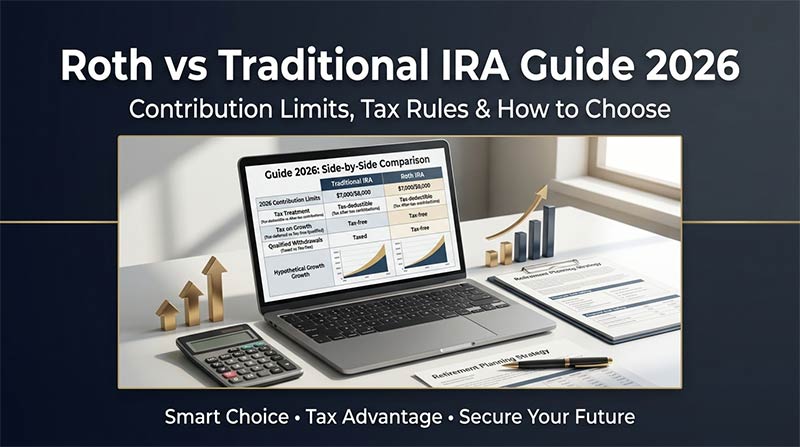
| Feature | Traditional IRA | Roth IRA |
| Tax Advantage | Upfront tax deduction | Tax-free growth & tax-free withdrawals |
| 2026 Contribution Limit | $7,500 ($8,600 if 50+) | $7,500 ($8,600 if 50+) |
| Income Deductibility Phase-Outs (2026) | Single: $81,000 – $91,000 (if covered by workplace plan) MFJ: $129,000 – $149,000 | Single: $153,000 – $168,000 (MAGI) MFJ: $242,000 – $252,000 (MAGI) |
| Early Liquidity | 10% penalty + taxes before 59½ | Principal contributions can be withdrawn anytime penalty-free |
| Required Minimum Distributions (RMDs) | Mandatory starting at age 73 | None during owner’s lifetime |
Tactical Strategy: The Backdoor Roth IRA
If your Modified Adjusted Gross Income (MAGI) exceeds the 2026 Roth IRA eligibility thresholds ($168,000 for single filers or $252,000 for married couples filing jointly), you cannot contribute directly to a Roth IRA.
However, high-earning solopreneurs can utilize the Backdoor Roth IRA maneuver:
- Make a non-deductible contribution of $7,500 to a Traditional IRA.
- Once the funds clear, execute a conversion of those funds into a Roth IRA.
- Pay income taxes only on any interest earned between deposit and conversion (typically a few cents).
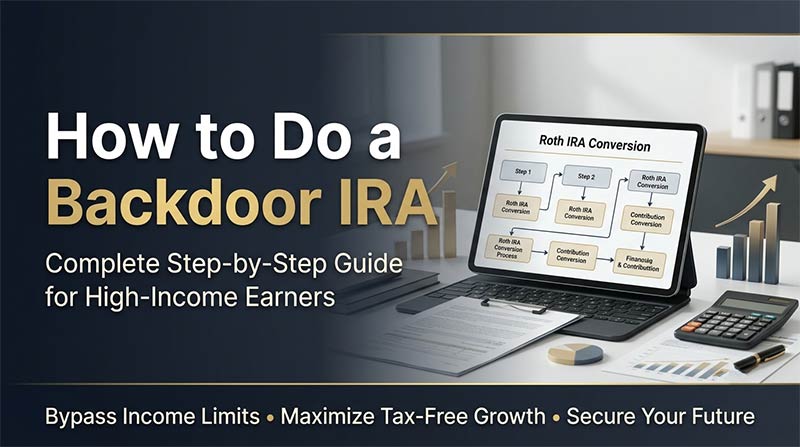
Crucial Tax Caveat (The Pro-Rata Rule): The IRS looks at all your traditional IRA assets collectively (including pre-tax SEP IRAs and Traditional IRAs) when calculating the tax on a Roth conversion. If you hold significant pre-tax dollars in a SEP IRA, a Backdoor Roth conversion will trigger proportional income taxes. To avoid this, high earners often roll their SEP IRA balances into a Solo 401(k) before executing a Backdoor Roth.
For a deeper look into selecting low-cost index funds and core assets inside your IRA, review our starter guide on investing basics for solopreneurs.
4. Health Savings Account (HSA): The Stealth Retirement Account
While engineered to cover qualified medical expenses, a Health Savings Account (HSA) represents one of the most effective stealth self-employed pension alternatives in 2026.
              ┌──────────────────────────────────────────────┐
              │      TRIPLE TAX ADVANTAGE OF AN HSA          │
              └──────────────────────┬───────────────────────┘
                                     │
           ┌─────────────────────────┼─────────────────────────┐
           ▼                         ▼                         ▼
  [ 1. Tax-Deductible ]     [ 2. Tax-Free Growth ]    [ 3. Tax-Free Cash Out ]
   Lowers current taxable    Investments compound      No tax when spent on
         income                 100% tax-exempt          medical expenses
How It Works
To qualify for an HSA, you must be enrolled in an HSA-eligible High Deductible Health Plan (HDHP).
2026 HSA Contribution Limits
- Self-Only Coverage: $4,300
- Family Coverage: $8,550
- Catch-Up Contribution (Age 55+): Additional $1,000
Why It Functions as a Retirement Account
- Triple Tax Advantage: Contributions are federal-income-tax-deductible, funds compound completely tax-free, and withdrawals are tax-free when used for healthcare expenses.
- FICA Tax Deduction for Self-Employed: If set up properly through your business payroll, HSA contributions can also reduce self-employment tax.
- The “Age 65 Provision”: Prior to age 65, non-medical withdrawals incur income taxes plus a 20% penalty. However, once you turn 65, the 20% penalty disappears. Non-medical withdrawals are treated exactly like a Traditional IRA (taxed as ordinary income), while medical withdrawals remain 100% tax-free.
5. Taxable Brokerage Accounts: Flexibility and Early Retirement (FIRE)
Standard individual or joint taxable brokerage accounts carry no special tax deductions, but they offer features that retirement accounts cannot match: zero rules and complete liquidity.
Why Solopreneurs Need Taxable Brokerage Exposure
- No Contribution Caps: You can invest $1,000 or $1,000,000 per year.
- No Early Withdrawal Penalties: If you plan to semi-retire or achieve financial independence at age 45 or 50, qualified retirement accounts (Solo 401k, SEP IRA) lock away money until age 59½ (barring specific exceptions like SEPP/Rule 72t or Roth principal withdrawals).
- Favorable Long-Term Capital Gains Tax Rates: Investments held longer than one year are taxed at preferential long-term capital gains rates (0%, 15%, or 20%), rather than higher ordinary income tax rates.
Combining a pre-tax Solo 401(k) with a taxable brokerage account provides tax diversification, giving you freedom to manage your tax brackets in retirement.
6. Real Estate & Income-Generating Assets
For many freelancers, physical real estate serves as an attractive alternative or supplement to paper assets.
                  ┌────────────────────────────────────────┐
                  │    REAL ESTATE TAX SHIELD MECHANICS    │
                  └───────────────────┬────────────────────┘
                                      │
          ┌───────────────────────────┴───────────────────────────┐
          ▼                                                       ▼
[ Gross Rental Income ]                                 [ Depreciation Shield ]
  Pass-through cash flow                                Paper loss offsets rental income
          │                                                       │
          └───────────────────────────┬───────────────────────────┘
                                      ▼
                        [ Net Taxable Cash Flow ≈ $0 ]
Strategic Advantages for the Self-Employed
- Inflation-Hedged Cash Flow: Rental income historically rises alongside inflation, providing a natural income stream that matches living costs.
- Depreciation Tax Shields: Non-cash depreciation deductions often allow real estate investors to shelter rental income from income taxes.
- Leverage: Purchasing assets using institutional leverage (mortgages) accelerates asset control compared to saving dollar-for-dollar in cash.
However, real estate is actively managed capital—it is not passive until third-party property management is integrated into the operational costs.
Comparison Table: Best Self-Employed Retirement Plans (2026)
The following table summarizes the core parameters, updated limits, and structural fits for the top retirement options for self-employed workers in 2026.
| Plan Type | 2026 Contribution Limit | Tax Treatment | Administrative Complexity | Flexibility & Withdrawals | Best Suited For |
| Solo 401(k) | Up to $72,000 total ($24,500 employee deferral + up to 25% profit share). Catch-up: $8,000 (50+) / $11,250 (60–63). | Pre-Tax (Traditional) or After-Tax (Roth). | Moderate. Requires plan creation by Dec 31; Form 5500-EZ required if assets exceed $250,000. | Participant loans allowed (up to $50k). Standard 10% early penalty before 59½. | Solopreneurs earning $70k+ without W-2 employees who want maximum annual savings. |
| SEP IRA | Up to $72,000 or 25% of compensation (~20% net earnings). No catch-up provisions. | Pre-tax contributions. Tax-deferred growth; taxed upon withdrawal. | Extremely Low. Fast online setup, no annual IRS filing required. | High contribution flexibility year-to-year. Standard 10% early penalty before 59½. | Freelancers with variable annual cash flow who want low maintenance and zero paperwork. |
| Roth IRA | $7,500 ($8,600 if age 50+). Subject to income phase-outs. | After-tax dollars. 100% tax-free growth and tax-free withdrawals. | Extremely Low. Open at any broker. | Principal contributions can be withdrawn anytime penalty-free. No RMDs. | Lower-to-mid earners or high earners utilizing the Backdoor Roth strategy. |
| Traditional IRA | $7,500 ($8,600 if age 50+). Deduction phases out based on MAGI if covered by workplace plan. | Pre-tax contributions (if eligible). Taxable withdrawals in retirement. | Extremely Low. Open at any broker. | Mandatory RMDs starting at age 73. Standard 10% penalty before 59½. | Starters seeking a basic upfront tax deduction or executing Backdoor Roth conversions. |
| HSA (Health Savings Account) | $4,300 (Single) / $8,550 (Family). Catch-up: $1,000 (55+). | Triple Tax-Advantaged: Pre-tax entry, tax-free growth, tax-free medical use. | Low. Requires enrollment in an HDHP. | 100% tax-free for medical expenses anytime. Acts like Traditional IRA after age 65. | Solopreneurs with an HDHP looking for an additional tax-sheltered investment engine. |
| Taxable Brokerage | Unlimited. No contribution caps. | Post-tax entry. Dividends and long-term capital gains taxed at lower capital gains rates. | None. Standard individual account. | Maximum Liquidity. Withdraw funds anytime without age penalties or tax locks. | Early retirement planners (FIRE) and those funding bridge years prior to age 59½. |
For detailed official guidance on plan qualifications and compliance rules, consult the IRS Retirement Plans for Self-Employed Guide and review IRS Publication 560.
Strategic Decision Matrix: Combining Accounts by Income Level
You do not have to select just one account type. The most tax-efficient retirement plans stack multiple account types together to build a resilient, multi-tiered structure.
Tier 1: Income < $50,000 ──► Roth IRA + Taxable Brokerage
Tier 2: Income $50,000–$100,000 ──► SEP IRA or Solo 401(k) + Roth IRA
Tier 3: Income $100,000+ ──► Solo 401(k) + Backdoor Roth IRA + HSA
Tier 1: Net Business Income Under $50,000
- Primary Target: Max out a Roth IRA ($7,500/year). At lower income brackets, tax deductions provide less absolute benefit compared to securing decades of tax-free growth.
- Secondary Target: Put excess savings into an HSA (if enrolled in an HDHP) or a taxable brokerage account for liquidity.
- Focus: Developing the habit of automated, percentage-based savings.
Tier 2: Net Business Income $50,000 to $100,000
- Primary Target: Max out a Roth IRA ($7,500).
- Secondary Target: Establish a SEP IRA or Solo 401(k).
- If you prefer zero paperwork: Use a SEP IRA and save 10%–15% of net profits.
- If you want to maximize tax deductions: Establish a Solo 401(k) and make employee deferrals up to $24,500.
- Focus: Lowering your federal income tax bracket while shielding income from self-employment taxes.
Tier 3: Net Business Income $100,000+
- Primary Target: Set up a Solo 401(k). Defer the maximum $24,500 employee portion (pre-tax or Roth) and stack profit-sharing contributions up to the combined $72,000 cap.
- Secondary Target: Execute a Backdoor Roth IRA ($7,500).
- Tertiary Target: Fully fund an HSA ($4,300 single / $8,550 family).
- Focus: Aggressive wealth accumulation, tax minimization, and asset location strategies.
Coordination between business expense deductions and retirement contributions requires careful planning. Review our guide on tax strategies for freelancers to coordinate deductible business expenses with retirement savings.
Practical Steps to Get Started with Irregular Income
The most common reason freelancers abandon retirement planning is cash flow friction: trying to fund fixed monthly contributions during lean months. Here is a practical step-by-step system to maintain consistency regardless of your revenue flow.
Invoiced Income ──► Receive Payment ──► Auto-Split (20% Taxes, 15% Retirement, 65% Operations)
                                                │
                                                ▼
                                    Retirement Account Deposit
Step 1: Establish a Percentage-Based Allocation Rule
Abandon fixed dollar-amount goals (e.g., “I will save $1,000 every month”). Instead, adopt a percentage-based rule.
Decide that 10%, 15%, or 20% of every client invoice gets allocated immediately to retirement the day the payment clears.
- When you have a $15,000 revenue month, you automatically deposit $2,250 (15%).
- When you have a $3,000 revenue month, you deposit $450 (15%).
This approach keeps your savings rate aligned with cash flow realities, preventing overdraft stress during lean periods.
Step 2: Build a Separate Business Reserve (“The Runway Buffer”)
Before aggressively funding illiquid retirement accounts, establish a 3-to-6-month cash reserve inside a high-yield business savings account. This operational buffer cushions seasonal dips, ensuring you never have to take an early, penalized distribution from a Solo 401(k) or SEP IRA to cover basic business expenses.
Step 3: Open and Fund Your Primary Account
Select a major brokerage (Fidelity, Charles Schwab, Vanguard, or E*TRADE) and open your chosen plan:
- For SEP IRA or Roth IRA: Can be opened online in minutes.
- For Solo 401(k): Complete the plan adoption agreement online. Ensure your provider supports custom features like Roth deferrals and participant loans if you need them.
Step 4: Automate quarterly or tax-time deposits
If invoice-by-invoice transfers create administrative friction, link your retirement contributions to your quarterly estimated tax payment schedule (April 15, June 15, September 15, January 15):
Every quarter, when you calculate and pay your estimated taxes, compute your net profit for the preceding 3 months and make your corresponding retirement transfer at the same time.
Common Pitfalls Self-Employed Workers Must Avoid
❌ Relying solely on selling the business
❌ Missing the December 31 Solo 401(k) establishment deadline
❌ Confusing Gross Revenue with Net Income when calculating limits
❌ Holding retirement funds in uninvested cash
❌ Operating without Disability Insurance
Pitfall 1: Relying Solely on “Selling the Business”
Solopreneurs often assume their business will serve as their pension: “I’ll just sell my agency for $1 million when I want to retire.”
For most solopreneurs, you are the business. If the business cannot run smoothly without your personal day-to-day work, its market enterprise value drops significantly when you step away. Treat your business as an income generator designed to purchase diversified paper and real assets, rather than assuming the business itself is the sole liquid asset.
Pitfall 2: Missing the December 31 Solo 401(k) Establishment Deadline
A frequent mistake among self-employed workers is waiting until tax prep season in April to establish a Solo 401(k) for the previous year.
Under IRS rules, a Solo 401(k) plan must be legally established by December 31 of the tax year for which you want to make employee contributions. While you have until your tax deadline (including extensions) to actually deposit the funds, the legal infrastructure must exist before the tax year ends. If you miss December 31, your fallback option for that tax year is limited to a SEP IRA.
Pitfall 3: Confusing Gross Revenue with Net Earned Income
Contribution calculations for SEP IRAs and Solo 401(k) employer profit-sharing contributions are based on Net Earned Income, not total gross revenue.
- Gross Revenue: $150,000
- Minus Business Expenses: -$40,000
- Net Business Profit: $110,000
- Minus Half of Self-Employment Tax Adjustment: ~$7,700
- Net Earned Income Base: ~$102,300
Employer profit-sharing limits apply to this net earned income base, not the headline $150,000 revenue number. Calculating contributions against gross revenue can lead to over-contribution penalties.
Pitfall 4: Leaving Contributions in Cash (The Inflation Trap)
Opening a retirement account and depositing cash is only step one. A surprising number of solopreneurs open a Roth IRA or SEP IRA, transfer money, and leave it sitting in cash or money market funds for years without purchasing assets.
Ensure your funds are invested according to your target asset allocation (e.g., broad-market low-cost index funds, total stock market ETFs, or target-date funds).
Pitfall 5: Overlooking Disability and Term Life Insurance
Your single largest asset as a self-employed individual is your ability to generate earned income. If an injury or severe illness leaves you unable to work for two years, your business stops, your cash flow dries up, and your retirement contributions cease.
Maintaining individual Own-Occupation Disability Insurance protects your baseline earning potential, ensuring your financial plan remains intact even if you cannot actively work.
Advisor’s Perspective: Real-World Lessons & Mindset Shifts
In my years advising freelancers, solopreneurs, and independent business owners, the single biggest obstacle to building long-term wealth isn’t a lack of options—it’s a fundamental mindset trap.
Most self-employed workers view retirement savings as an burdensome extra tax or an uncomfortable personal expense. When cash flow tightens, retirement savings are usually the first line item cut from the budget.
Successful solopreneurs flip this mental model completely: They view retirement contributions as a non-negotiable operational expense.
Traditional Freelancer Mindset:
Revenue ──► Business Expenses ──► Living Costs ──► Leftover Savings (Often $0)

Wealth-Building Solopreneur Mindset:
Revenue ──► Pay Yourself & Retirement First (15%) ──► Operations & Living Costs
When you pay yourself first through a pre-tax Solo 401(k) or SEP IRA, you are not losing capital; you are transferring money from your short-term business account into your long-term personal wealth account—while receiving an immediate discount from the government in reduced taxes.
Real Client Case Study: From Tax Stress to $45,000 Annual Savings
A 38-year-old freelance UX designer came to me several years ago earning approximately $140,000 in net profit as a single-member LLC. She was keeping all her cash in a standard business checking account, paying over $38,000 in combined state and federal income taxes, and feeling stressed about her future.
We executed three adjustments:
- Elected S-Corp tax status and set a reasonable W-2 salary of $70,000, with the remaining $70,000 taken as owner distributions (saving over $5,000 in self-employment taxes).
- Established a Solo 401(k) with a Roth option.
- Contributed $24,500 as an employee deferral and added $17,500 in employer profit sharing (25% of W-2 salary).
The Result: She sheltered $42,000 in income from taxes in year one, reduced her current federal tax bill by over $10,000, and put her retirement savings on autopilot—all without changing her personal daily lifestyle.
Conclusion: Building Your Custom Private Pension System
Working for yourself should not mean sacrificing financial security in your later years. While corporate workers rely on automated workplace pensions, self-employed workers have access to a versatile set of tax-sheltered investment options.
Whether you choose the high contribution limits of a Solo 401(k), the low-maintenance simplicity of a SEP IRA, the tax-free upside of a Roth IRA, or a multi-account structure paired with an HSA, the most critical variable is not finding the single “perfect” account. It is starting early and maintaining consistency.
- If you earn over $70,000 and have no employees: Open a Solo 401(k) before December 31.
- If you want immediate setup with zero paperwork: Open a SEP IRA today.
- If you are starting small: Set up a Roth IRA and automate a percentage-based transfer from every invoice.
Take control of your private pension engine today. Explore our step-by-step guides on retirement planning strategies and learn how to optimize your long-term financial freedom on www.cashing.top.
When you make the leap from traditional employment to working for yourself, the trade-offs become clear very quickly. You gain autonomy, complete control over your schedule, and uncapped earning potential. But you also lose the corporate safety net—most notably, the company-sponsored retirement plan, the automatic payroll deduction, and the coveted 4% or 6% employer match.
For freelancers, solopreneurs, and independent contractors, there is no HR department sending reminder emails about open enrollment. No default pension scheme automatically stashing away a percentage of your monthly income. Every single dollar of your future financial security rests entirely on your shoulders.
This dynamic creates a widespread crisis among self-employed workers. According to industry data, nearly 40% of freelancers do not consistently save for retirement, often assuming that traditional pensions don’t apply to them or feeling overwhelmed by the alphabet soup of self-employed accounts. Many rely on the dangerous assumption that they will simply “work forever” or eventually sell their business for a windfall.
However, building a private pension system is not only achievable—it is one of the most tax-efficient moves a self-employed business owner can make. Modern pension alternatives for self-employed individuals offer higher contribution ceilings, greater investment flexibility, and more potent tax deductions than standard corporate 401(k) plans.
In this comprehensive guide, we will break down the top retirement options for self-employed workers in 2026, analyze updated contribution limits, evaluate tax strategies, and present a practical framework to build your custom retirement engine—even with unpredictable monthly income.
Why Self-Employed Workers Need Dedicated Retirement Strategies
Traditional workplace pensions and corporate 401(k) plans are engineered around predictability. They rely on steady, biweekly paychecks and standardized employer contributions. As a freelancer or solopreneur, your cash flow is inherently cyclical. You might invoice $20,000 in a banner month like October and struggle to collect $3,000 in January.
Attempting to fit an irregular freelance income into a rigid, traditional pension framework often leads to total inaction. When income drops, fixed monthly contributions get canceled—and they rarely get restarted when revenue recovers.
[ Unpredictable Cash Flow ] ---> [ Avoids Rigid Plans ] ---> [ $0 Saved ]
         │
         ▼
[ Flexible Self-Employed Plan ] ---> [ Percentage-Based Saving ] ---> [ Tax-Deducted Wealth ]
Beyond cash flow volatility, self-employed workers face a unique tax burden that makes tax-deferred retirement accounts essential: Self-Employment (SE) Tax.
When you work as a W-2 employee, your employer pays 7.65% toward Social Security and Medicare taxes, while you pay the remaining 7.65%. When you are self-employed, you pay both halves—a combined 15.3% FICA tax on your net business earnings, on top of federal and state income taxes.
W-2 Employee Tax Split:   [ Employee: 7.65% ] + [ Employer: 7.65% ] = 15.3% FICA
Self-Employed Tax Burden: [ You Pay Full 15.3% Self-Employment Tax ] + Income Taxes
By leveraging dedicated self-employed pension alternatives in 2026, you can directly reduce your Adjusted Gross Income (AGI). Every dollar you contribute to a pre-tax Solo 401(k) or SEP IRA reduces your overall taxable income, effectively yielding an instant, guaranteed return equal to your marginal tax bracket.
The Cost of Delay: A Real-World Compounding Example
To understand why establishing a plan today is critical, consider two 30-year-old freelancers, Alex and Maya:
- Alex waits until age 40 to begin saving, but aggressively puts away $15,000 per year until age 65 (25 years total). Total out-of-pocket contributions: $375,000.
- Maya starts immediately at age 30, contributing $7,500 per year for 15 years, then stops entirely at age 45, letting the money compound untouched until age 65. Total out-of-pocket contributions: $112,500.
Assuming an average annual return of 7%:
- Alex’s Portfolio at Age 65: ~$948,000
- Maya’s Portfolio at Age 65: ~$1,041,000
Maya invested less than one-third of the cash Alex did, yet ended up with nearly $100,000 more at retirement simply because she started ten years earlier. For independent workers, time in the market is your greatest asset.
For a broader foundation on managing variable cash flow, review our comprehensive self-employed finances guide to establish a solid business budgeting baseline before allocating capital.
Top Pension Alternatives for Self-Employed Workers in 2026
When evaluating the best retirement plans for freelancers, there is no single “best” account. The optimal choice depends on your net income, whether you have employees, your business structure (Sole Proprietorship, LLC, or S-Corp), and how much administrative oversight you are willing to manage.
                       ┌─────────────────────────────────────────┐
                       │  Which Plan Fits Your Income & Goals?   │
                       └────────────────────┬────────────────────┘
                                            │
                    ┌───────────────────────┴───────────────────────┐
                    ▼                                               ▼
          [ Net Income < $50k ]                           [ Net Income $70k+ ]
                    │                                               │
          ┌─────────┴─────────┐                           ┌─────────┴─────────┐
          ▼                   ▼                           ▼                   ▼
    [ Traditional/      [ SEP IRA ]                 [ Solo 401(k) ]    [ Backdoor Roth ]
      Roth IRA ]      (Low admin)                   (Max limits)       (Tax-free growth)
1. The Solo 401(k) (Individual 401k): The High-Earner’s Wealth Accelerator
The Solo 401(k)—also known as an Individual 401(k) or One-Participant 401(k)—is arguably the most powerful retirement vehicle available to self-employed individuals who have no full-time employees (other than a spouse).
How It Works
The unique advantage of a Solo 401(k) is that you wear two hats: you are both the employee and the employer. This allows you to make contributions in two separate categories up to a generous annual aggregate ceiling.
- As the Employee (Elective Deferral): You can contribute up to 100% of your earned income up to the employee limit.
- As the Employer (Profit Sharing): You can make an additional profit-sharing contribution of up to 25% of your W-2 wages (if structured as an S-Corp) or approximately 20% of net self-employment earnings (if filing Schedule C as a sole proprietor or single-member LLC).
2026 Contribution Limits
- Employee Elective Deferral Limit: $24,500 (up from $23,500 in 2025).
- Catch-Up Contribution (Ages 50–59 & 64+): Additional $8,000, bringing the employee limit to $32,500.
- SECURE 2.0 Enhanced Catch-Up (Ages 60–63): Under SECURE 2.0 provisions, individuals aged 60 to 63 can make an enhanced catch-up contribution of $11,250, bringing their total employee deferral limit to $35,750.
- Overall Maximum Contribution Ceiling (Combined Employee + Employer): $72,000 for savers under 50 (up from $70,000 in 2025). Total potential limit reaches $80,000 for age 50–59/64+ or $83,250 for age 60–63.
Tax Treatment Options
- Traditional Solo 401(k): Contributions are pre-tax, reducing current-year income taxes. Withdrawals in retirement are taxed as ordinary income.
- Roth Solo 401(k): Employee deferrals are made with after-tax dollars. Investments grow 100% tax-free, and qualified withdrawals after age 59½ are completely tax-free.
Key Advantages
- Supercharged Front-Loading: Even if your net self-employment income is $30,000, you can shelter $24,500 as an employee deferral. A SEP IRA would require earning over $120,000 to save that same amount.
- Roth Flexibility: Allows employee deferrals to be designated as Roth, regardless of how high your income is.
- Participant Loans: Most custom Solo 401(k) providers allow you to borrow up to 50% of your account balance (up to a $50,000 maximum) tax-free and penalty-free for business or personal emergency liquidity.
- Spouse Inclusion: If your spouse earns income from the business, they can participate as an employee, effectively doubling your household contribution capacity to $144,000+ per year.
Potential Drawbacks
- Administrative Deadline: To make contributions for a tax year, the plan MUST be legally established by December 31 of that tax year (though contributions can be deposited up to your tax filing deadline, including extensions).
- IRS Form 5500-EZ Requirement: Once your total plan assets across all accounts exceed $250,000, you must file an annual informational report (Form 5500-EZ) with the IRS.
- No Full-Time Employees: If you hire W-2 staff who work more than 1,000 hours per year, you can no longer maintain a Solo 401(k) and must transition to a standard company 401(k).
Best Suited For: Mid-to-high earning freelancers, consultants, and solopreneurs ($70,000+ net income) with no W-2 staff who want to maximize tax deductions or Roth contributions.
2. The SEP IRA: Ultimate Flexibility for Variable Earnings
The Simplified Employee Pension (SEP) IRA has long been a staple among pension options for solopreneurs due to its unmatched administrative simplicity.
                 ┌──────────────────────────────────────┐
                 │       SEP IRA vs. SOLO 401(k)       │
                 └──────────────────┬───────────────────┘
                                    │
           ┌────────────────────────┴────────────────────────┐
           ▼                                                 ▼
[ SEP IRA: Employer Only ]                        [ Solo 401(k): Dual Role ]
  • Max ~20% of net profit                          • Employee deferral ($24,500)
  • Single contribution bucket                      • Plus ~20% Employer profit share
  • $0 admin / setup anytime                        • Higher savings at lower incomes
How It Works
In a SEP IRA, contributions are treated strictly as employer contributions. You cannot make individual “employee deferrals” into a SEP IRA.
Contributions are calculated as a flat percentage of your net self-employment income (after subtracting half of your self-employment tax and business expenses).
2026 Contribution Limits
- Maximum Contribution Ceiling: Up to 25% of compensation (which works out to 20% of net earnings for Schedule C sole proprietors), up to a maximum of $72,000 for 2026.
- No Catch-Up Contributions: Unlike 401(k)s or personal IRAs, standard SEP IRAs do not offer catch-up provisions for individuals over 50.
Tax Treatment
Contributions are pre-tax and tax-deductible. Investments grow tax-deferred until drawn down in retirement.
Key Advantages
- Zero Administrative Overhead: Takes less than 10 minutes to set up online with brokers like Fidelity, Vanguard, or Charles Schwab. No annual IRS filings (no Form 5500 required).
- Flexible Deadlines: You can establish and fund a SEP IRA as late as your tax filing deadline—including extensions. For example, a 2026 SEP IRA can be opened and funded until October 15, 2027 if you file an extension.
- Total Contribution Discretion: You are never locked into a fixed percentage. In a low-revenue year, you can contribute 0%; in a record-breaking year, you can contribute the full 20% of net profits up to $72,000.
Potential Drawbacks
- High Income Requirement for Large Savings: Because you are limited to ~20% of net earnings, saving $20,000 requires earning approximately $100,000 in net profit.
- Equal Coverage Rule for Employees: If you hire W-2 employees who meet basic eligibility requirements (age 21+, worked 3 of last 5 years), you must contribute the exact same percentage of their salary as you do for yourself. If you put 15% of your profit into your SEP, you must contribute 15% of every eligible employee’s salary.
- Pro-Rata Rule Impact: Pre-tax dollars in a SEP IRA interfere with executing the “Backdoor Roth IRA” strategy (discussed below).
Best Suited For: Freelancers seeking a hassle-free, low-maintenance retirement plan with variable cash flow, or those who missed the December 31 deadline for a Solo 401(k).
3. Traditional & Roth IRAs: The Essential Foundational Layer
Individual Retirement Accounts (IRAs) are personal accounts available to anyone with earned income, regardless of employment structure. They serve as an ideal baseline layer for self-employed retirement saving.
2026 Contribution Limits
- Base Annual Contribution Limit: $7,500 across all personal IRAs (up from $7,000 in 2025).
- Catch-Up Limit (Age 50+): $1,100 (indexed for inflation under SECURE 2.0), bringing the total 2026 limit to $8,600.
Traditional vs. Roth Comparison for Self-Employed Workers
| Feature | Traditional IRA | Roth IRA |
| Tax Advantage | Upfront tax deduction | Tax-free growth & tax-free withdrawals |
| 2026 Contribution Limit | $7,500 ($8,600 if 50+) | $7,500 ($8,600 if 50+) |
| Income Deductibility Phase-Outs (2026) | Single: $81,000 – $91,000 (if covered by workplace plan) MFJ: $129,000 – $149,000 | Single: $153,000 – $168,000 (MAGI) MFJ: $242,000 – $252,000 (MAGI) |
| Early Liquidity | 10% penalty + taxes before 59½ | Principal contributions can be withdrawn anytime penalty-free |
| Required Minimum Distributions (RMDs) | Mandatory starting at age 73 | None during owner’s lifetime |
Tactical Strategy: The Backdoor Roth IRA
If your Modified Adjusted Gross Income (MAGI) exceeds the 2026 Roth IRA eligibility thresholds ($168,000 for single filers or $252,000 for married couples filing jointly), you cannot contribute directly to a Roth IRA.
However, high-earning solopreneurs can utilize the Backdoor Roth IRA maneuver:
- Make a non-deductible contribution of $7,500 to a Traditional IRA.
- Once the funds clear, execute a conversion of those funds into a Roth IRA.
- Pay income taxes only on any interest earned between deposit and conversion (typically a few cents).
Crucial Tax Caveat (The Pro-Rata Rule): The IRS looks at all your traditional IRA assets collectively (including pre-tax SEP IRAs and Traditional IRAs) when calculating the tax on a Roth conversion. If you hold significant pre-tax dollars in a SEP IRA, a Backdoor Roth conversion will trigger proportional income taxes. To avoid this, high earners often roll their SEP IRA balances into a Solo 401(k) before executing a Backdoor Roth.
For a deeper look into selecting low-cost index funds and core assets inside your IRA, review our starter guide on investing basics for solopreneurs.
4. Health Savings Account (HSA): The Stealth Retirement Account
While engineered to cover qualified medical expenses, a Health Savings Account (HSA) represents one of the most effective stealth self-employed pension alternatives in 2026.
              ┌──────────────────────────────────────────────┐
              │      TRIPLE TAX ADVANTAGE OF AN HSA          │
              └──────────────────────┬───────────────────────┘
                                     │
           ┌─────────────────────────┼─────────────────────────┐
           ▼                         ▼                         ▼
  [ 1. Tax-Deductible ]     [ 2. Tax-Free Growth ]    [ 3. Tax-Free Cash Out ]
   Lowers current taxable    Investments compound      No tax when spent on
         income                 100% tax-exempt          medical expenses
How It Works
To qualify for an HSA, you must be enrolled in an HSA-eligible High Deductible Health Plan (HDHP).
2026 HSA Contribution Limits
- Self-Only Coverage: $4,300
- Family Coverage: $8,550
- Catch-Up Contribution (Age 55+): Additional $1,000
Why It Functions as a Retirement Account
- Triple Tax Advantage: Contributions are federal-income-tax-deductible, funds compound completely tax-free, and withdrawals are tax-free when used for healthcare expenses.
- FICA Tax Deduction for Self-Employed: If set up properly through your business payroll, HSA contributions can also reduce self-employment tax.
- The “Age 65 Provision”: Prior to age 65, non-medical withdrawals incur income taxes plus a 20% penalty. However, once you turn 65, the 20% penalty disappears. Non-medical withdrawals are treated exactly like a Traditional IRA (taxed as ordinary income), while medical withdrawals remain 100% tax-free.
5. Taxable Brokerage Accounts: Flexibility and Early Retirement (FIRE)
Standard individual or joint taxable brokerage accounts carry no special tax deductions, but they offer features that retirement accounts cannot match: zero rules and complete liquidity.
Why Solopreneurs Need Taxable Brokerage Exposure
- No Contribution Caps: You can invest $1,000 or $1,000,000 per year.
- No Early Withdrawal Penalties: If you plan to semi-retire or achieve financial independence at age 45 or 50, qualified retirement accounts (Solo 401k, SEP IRA) lock away money until age 59½ (barring specific exceptions like SEPP/Rule 72t or Roth principal withdrawals).
- Favorable Long-Term Capital Gains Tax Rates: Investments held longer than one year are taxed at preferential long-term capital gains rates (0%, 15%, or 20%), rather than higher ordinary income tax rates.
Combining a pre-tax Solo 401(k) with a taxable brokerage account provides tax diversification, giving you freedom to manage your tax brackets in retirement.
6. Real Estate & Income-Generating Assets
For many freelancers, physical real estate serves as an attractive alternative or supplement to paper assets.
                  ┌────────────────────────────────────────┐
                  │    REAL ESTATE TAX SHIELD MECHANICS    │
                  └───────────────────┬────────────────────┘
                                      │
          ┌───────────────────────────┴───────────────────────────┐
          ▼                                                       ▼
[ Gross Rental Income ]                                 [ Depreciation Shield ]
  Pass-through cash flow                                Paper loss offsets rental income
          │                                                       │
          └───────────────────────────┬───────────────────────────┘
                                      ▼
                        [ Net Taxable Cash Flow ≈ $0 ]
Strategic Advantages for the Self-Employed
- Inflation-Hedged Cash Flow: Rental income historically rises alongside inflation, providing a natural income stream that matches living costs.
- Depreciation Tax Shields: Non-cash depreciation deductions often allow real estate investors to shelter rental income from income taxes.
- Leverage: Purchasing assets using institutional leverage (mortgages) accelerates asset control compared to saving dollar-for-dollar in cash.
However, real estate is actively managed capital—it is not passive until third-party property management is integrated into the operational costs.
Comparison Table: Best Self-Employed Retirement Plans (2026)
The following table summarizes the core parameters, updated limits, and structural fits for the top retirement options for self-employed workers in 2026.
| Plan Type | 2026 Contribution Limit | Tax Treatment | Administrative Complexity | Flexibility & Withdrawals | Best Suited For |
| Solo 401(k) | Up to $72,000 total ($24,500 employee deferral + up to 25% profit share). Catch-up: $8,000 (50+) / $11,250 (60–63). | Pre-Tax (Traditional) or After-Tax (Roth). | Moderate. Requires plan creation by Dec 31; Form 5500-EZ required if assets exceed $250,000. | Participant loans allowed (up to $50k). Standard 10% early penalty before 59½. | Solopreneurs earning $70k+ without W-2 employees who want maximum annual savings. |
| SEP IRA | Up to $72,000 or 25% of compensation (~20% net earnings). No catch-up provisions. | Pre-tax contributions. Tax-deferred growth; taxed upon withdrawal. | Extremely Low. Fast online setup, no annual IRS filing required. | High contribution flexibility year-to-year. Standard 10% early penalty before 59½. | Freelancers with variable annual cash flow who want low maintenance and zero paperwork. |
| Roth IRA | $7,500 ($8,600 if age 50+). Subject to income phase-outs. | After-tax dollars. 100% tax-free growth and tax-free withdrawals. | Extremely Low. Open at any broker. | Principal contributions can be withdrawn anytime penalty-free. No RMDs. | Lower-to-mid earners or high earners utilizing the Backdoor Roth strategy. |
| Traditional IRA | $7,500 ($8,600 if age 50+). Deduction phases out based on MAGI if covered by workplace plan. | Pre-tax contributions (if eligible). Taxable withdrawals in retirement. | Extremely Low. Open at any broker. | Mandatory RMDs starting at age 73. Standard 10% penalty before 59½. | Starters seeking a basic upfront tax deduction or executing Backdoor Roth conversions. |
| HSA (Health Savings Account) | $4,300 (Single) / $8,550 (Family). Catch-up: $1,000 (55+). | Triple Tax-Advantaged: Pre-tax entry, tax-free growth, tax-free medical use. | Low. Requires enrollment in an HDHP. | 100% tax-free for medical expenses anytime. Acts like Traditional IRA after age 65. | Solopreneurs with an HDHP looking for an additional tax-sheltered investment engine. |
| Taxable Brokerage | Unlimited. No contribution caps. | Post-tax entry. Dividends and long-term capital gains taxed at lower capital gains rates. | None. Standard individual account. | Maximum Liquidity. Withdraw funds anytime without age penalties or tax locks. | Early retirement planners (FIRE) and those funding bridge years prior to age 59½. |
For detailed official guidance on plan qualifications and compliance rules, consult the IRS Retirement Plans for Self-Employed Guide and review IRS Publication 560.
Strategic Decision Matrix: Combining Accounts by Income Level
You do not have to select just one account type. The most tax-efficient retirement plans stack multiple account types together to build a resilient, multi-tiered structure.
Tier 1: Income < $50,000 ──► Roth IRA + Taxable Brokerage
Tier 2: Income $50,000–$100,000 ──► SEP IRA or Solo 401(k) + Roth IRA
Tier 3: Income $100,000+ ──► Solo 401(k) + Backdoor Roth IRA + HSA
Tier 1: Net Business Income Under $50,000
- Primary Target: Max out a Roth IRA ($7,500/year). At lower income brackets, tax deductions provide less absolute benefit compared to securing decades of tax-free growth.
- Secondary Target: Put excess savings into an HSA (if enrolled in an HDHP) or a taxable brokerage account for liquidity.
- Focus: Developing the habit of automated, percentage-based savings.
Tier 2: Net Business Income $50,000 to $100,000
- Primary Target: Max out a Roth IRA ($7,500).
- Secondary Target: Establish a SEP IRA or Solo 401(k).
- If you prefer zero paperwork: Use a SEP IRA and save 10%–15% of net profits.
- If you want to maximize tax deductions: Establish a Solo 401(k) and make employee deferrals up to $24,500.
- Focus: Lowering your federal income tax bracket while shielding income from self-employment taxes.
Tier 3: Net Business Income $100,000+
- Primary Target: Set up a Solo 401(k). Defer the maximum $24,500 employee portion (pre-tax or Roth) and stack profit-sharing contributions up to the combined $72,000 cap.
- Secondary Target: Execute a Backdoor Roth IRA ($7,500).
- Tertiary Target: Fully fund an HSA ($4,300 single / $8,550 family).
- Focus: Aggressive wealth accumulation, tax minimization, and asset location strategies.
Coordination between business expense deductions and retirement contributions requires careful planning. Review our guide on tax strategies for freelancers to coordinate deductible business expenses with retirement savings.
Practical Steps to Get Started with Irregular Income
The most common reason freelancers abandon retirement planning is cash flow friction: trying to fund fixed monthly contributions during lean months. Here is a practical step-by-step system to maintain consistency regardless of your revenue flow.
Invoiced Income ──► Receive Payment ──► Auto-Split (20% Taxes, 15% Retirement, 65% Operations)
                                                │
                                                ▼
                                    Retirement Account Deposit
Step 1: Establish a Percentage-Based Allocation Rule
Abandon fixed dollar-amount goals (e.g., “I will save $1,000 every month”). Instead, adopt a percentage-based rule.
Decide that 10%, 15%, or 20% of every client invoice gets allocated immediately to retirement the day the payment clears.
- When you have a $15,000 revenue month, you automatically deposit $2,250 (15%).
- When you have a $3,000 revenue month, you deposit $450 (15%).
This approach keeps your savings rate aligned with cash flow realities, preventing overdraft stress during lean periods.
Step 2: Build a Separate Business Reserve (“The Runway Buffer”)
Before aggressively funding illiquid retirement accounts, establish a 3-to-6-month cash reserve inside a high-yield business savings account. This operational buffer cushions seasonal dips, ensuring you never have to take an early, penalized distribution from a Solo 401(k) or SEP IRA to cover basic business expenses.
Step 3: Open and Fund Your Primary Account
Select a major brokerage (Fidelity, Charles Schwab, Vanguard, or E*TRADE) and open your chosen plan:
- For SEP IRA or Roth IRA: Can be opened online in minutes.
- For Solo 401(k): Complete the plan adoption agreement online. Ensure your provider supports custom features like Roth deferrals and participant loans if you need them.
Step 4: Automate quarterly or tax-time deposits
If invoice-by-invoice transfers create administrative friction, link your retirement contributions to your quarterly estimated tax payment schedule (April 15, June 15, September 15, January 15):
Every quarter, when you calculate and pay your estimated taxes, compute your net profit for the preceding 3 months and make your corresponding retirement transfer at the same time.
Common Pitfalls Self-Employed Workers Must Avoid
❌ Relying solely on selling the business
❌ Missing the December 31 Solo 401(k) establishment deadline
❌ Confusing Gross Revenue with Net Income when calculating limits
❌ Holding retirement funds in uninvested cash
❌ Operating without Disability Insurance
Pitfall 1: Relying Solely on “Selling the Business”
Solopreneurs often assume their business will serve as their pension: “I’ll just sell my agency for $1 million when I want to retire.”
For most solopreneurs, you are the business. If the business cannot run smoothly without your personal day-to-day work, its market enterprise value drops significantly when you step away. Treat your business as an income generator designed to purchase diversified paper and real assets, rather than assuming the business itself is the sole liquid asset.
Pitfall 2: Missing the December 31 Solo 401(k) Establishment Deadline
A frequent mistake among self-employed workers is waiting until tax prep season in April to establish a Solo 401(k) for the previous year.
Under IRS rules, a Solo 401(k) plan must be legally established by December 31 of the tax year for which you want to make employee contributions. While you have until your tax deadline (including extensions) to actually deposit the funds, the legal infrastructure must exist before the tax year ends. If you miss December 31, your fallback option for that tax year is limited to a SEP IRA.
Pitfall 3: Confusing Gross Revenue with Net Earned Income
Contribution calculations for SEP IRAs and Solo 401(k) employer profit-sharing contributions are based on Net Earned Income, not total gross revenue.
- Gross Revenue: $150,000
- Minus Business Expenses: -$40,000
- Net Business Profit: $110,000
- Minus Half of Self-Employment Tax Adjustment: ~$7,700
- Net Earned Income Base: ~$102,300
Employer profit-sharing limits apply to this net earned income base, not the headline $150,000 revenue number. Calculating contributions against gross revenue can lead to over-contribution penalties.
Pitfall 4: Leaving Contributions in Cash (The Inflation Trap)
Opening a retirement account and depositing cash is only step one. A surprising number of solopreneurs open a Roth IRA or SEP IRA, transfer money, and leave it sitting in cash or money market funds for years without purchasing assets.
Ensure your funds are invested according to your target asset allocation (e.g., broad-market low-cost index funds, total stock market ETFs, or target-date funds).
Pitfall 5: Overlooking Disability and Term Life Insurance
Your single largest asset as a self-employed individual is your ability to generate earned income. If an injury or severe illness leaves you unable to work for two years, your business stops, your cash flow dries up, and your retirement contributions cease.
Maintaining individual Own-Occupation Disability Insurance protects your baseline earning potential, ensuring your financial plan remains intact even if you cannot actively work.
Advisor’s Perspective: Real-World Lessons & Mindset Shifts
In my years advising freelancers, solopreneurs, and independent business owners, the single biggest obstacle to building long-term wealth isn’t a lack of options—it’s a fundamental mindset trap.
Most self-employed workers view retirement savings as an burdensome extra tax or an uncomfortable personal expense. When cash flow tightens, retirement savings are usually the first line item cut from the budget.
Successful solopreneurs flip this mental model completely: They view retirement contributions as a non-negotiable operational expense.
Traditional Freelancer Mindset:
Revenue ──► Business Expenses ──► Living Costs ──► Leftover Savings (Often $0)

Wealth-Building Solopreneur Mindset:
Revenue ──► Pay Yourself & Retirement First (15%) ──► Operations & Living Costs
When you pay yourself first through a pre-tax Solo 401(k) or SEP IRA, you are not losing capital; you are transferring money from your short-term business account into your long-term personal wealth account—while receiving an immediate discount from the government in reduced taxes.
Real Client Case Study: From Tax Stress to $45,000 Annual Savings
A 38-year-old freelance UX designer came to me several years ago earning approximately $140,000 in net profit as a single-member LLC. She was keeping all her cash in a standard business checking account, paying over $38,000 in combined state and federal income taxes, and feeling stressed about her future.
We executed three adjustments:
- Elected S-Corp tax status and set a reasonable W-2 salary of $70,000, with the remaining $70,000 taken as owner distributions (saving over $5,000 in self-employment taxes).
- Established a Solo 401(k) with a Roth option.
- Contributed $24,500 as an employee deferral and added $17,500 in employer profit sharing (25% of W-2 salary).
The Result: She sheltered $42,000 in income from taxes in year one, reduced her current federal tax bill by over $10,000, and put her retirement savings on autopilot—all without changing her personal daily lifestyle.
Building Your Custom Private Pension System
Working for yourself should not mean sacrificing financial security in your later years. While corporate workers rely on automated workplace pensions, self-employed workers have access to a versatile set of tax-sheltered investment options.
Whether you choose the high contribution limits of a Solo 401(k), the low-maintenance simplicity of a SEP IRA, the tax-free upside of a Roth IRA, or a multi-account structure paired with an HSA, the most critical variable is not finding the single “perfect” account. It is starting early and maintaining consistency.
- If you earn over $70,000 and have no employees: Open a Solo 401(k) before December 31.
- If you want immediate setup with zero paperwork: Open a SEP IRA today.
- If you are starting small: Set up a Roth IRA and automate a percentage-based transfer from every invoice.
Take control of your private pension engine today. Explore our step-by-step guides on retirement planning strategies and learn how to optimize your long-term financial freedom on www.cashing.top.

Want to Make Money From Home ?
Join 55,000+ real, remote ways to make money every week.
Good luck! I hope you find the perfect remote opportunity for your lifestyle and goals.
Disclaimer: This article is intended solely for educational and informational purposes and does not constitute personalized financial, legal, or investment advice. Always consult with a qualified financial advisor or non-profit credit counselor regarding your specific situation.