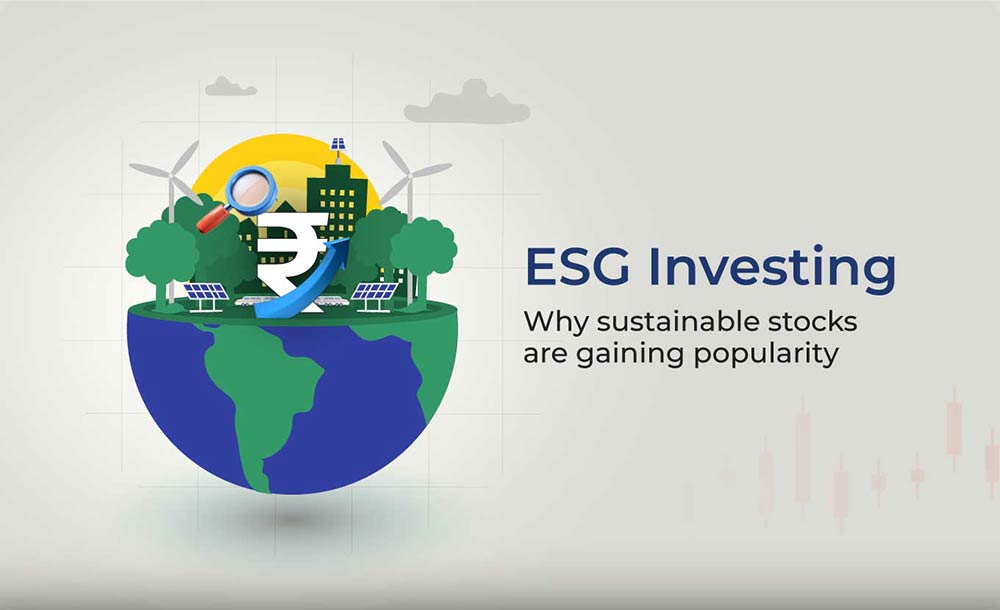
For decades, the financial world viewed “green investing” as a niche pursuit for the morally inclined—a way to feel good while accepting lower returns. That era is dead. Today, capital is migrating toward sustainability not just for the planet, but because climate risk is financial risk.
The real “Alpha” (market-beating return) is increasingly found at the intersection of decarbonization and technological breakthrough. If you aren’t tracking ESG metrics or the carbon market, you aren’t just missing a trend; you’re ignoring a fundamental shift in the global economy.
1. ESG Funds: Moving Beyond the “Feel-Good” Metric
Environmental, Social, and Governance (ESG) criteria are the primary tools used to screen investments. However, the market is moving away from “negative screening” (avoiding oil or tobacco) toward thematic investing—actively seeking companies that solve problems.
The key is identifying Financial Materiality. Not every ESG factor affects the bottom line. For an airline, carbon emissions are a massive financial risk; for a software company, data privacy (the “S” and “G”) matters more.
Breaking Down the ESG Pillars
| Pillar | Focus Area | Why It Matters to Your Wallet |
| Environmental | Carbon footprint, waste management, resource scarcity. | Regulation and carbon taxes can crush margins for laggards. |
| Social | Labor relations, diversity, product safety, data privacy. | High turnover and lawsuits destroy long-term brand equity. |
| Governance | Board diversity, executive pay, ethics, transparency. | Poor oversight leads to scandals (e.g., the 2008 crash or recent tech implosions). |
2. Carbon Credits: Investing in the Invisible Commodity
The carbon market is perhaps the most misunderstood asset class in the green space. It is divided into two distinct worlds:
- Compliance Markets: Government-mandated “Cap and Trade” systems (like the EU Emissions Trading System). These are highly regulated and liquid.
- Voluntary Markets: Where companies buy credits to offset their own footprints.
The Contrarian View: Many critics call carbon credits “indulgences” for polluters. From a hard-nosed investment perspective, however, they are a hedge against future regulation. As the “price per ton” of CO2 rises, the companies holding these credits or the technology to generate them (Carbon Capture) become incredibly valuable. You can track current global pricing via the World Bank Carbon Pricing Dashboard.
3. Renewable Energy: The Infrastructure of the 21st Century
We have moved past the “early adopter” phase of wind and solar. We are now in the deployment and storage phase.
Investing in renewables isn’t just about buying a solar panel manufacturer; it’s about the infrastructure that supports the transition. This includes:
- Grid Modernization: Our current grids can’t handle the intermittent nature of renewables.
- Energy Storage: Lithium-ion is the current king, but solid-state batteries and hydrogen are the next frontiers.
- Critical Minerals: You can’t have a green revolution without copper, lithium, and cobalt.
The International Energy Agency (IEA) notes that for every $1 spent on fossil fuels, $1.70 is now going into clean energy. That ratio is only going to widen.
The “AI Perspective”: Identifying the Greenwashing Trap
If I were to analyze this like a machine looking for patterns, the biggest “red flag” in the market is Greenwashing. Companies often use ESG as a marketing shell to hide stagnant business models.
To find the winners, look for CAPEX (Capital Expenditure) alignment. Don’t listen to what a CEO says in a press release; look at where they are spending their money. If a company claims to be “Net Zero” by 2040 but is still investing 90% of its budget into legacy infrastructure, they are a sell.
The real winners are the “Enablers”—the companies that provide the tools (software, hardware, and chemistry) for everyone else to go green.
Sustainable investing isn’t about charity; it’s about future-proofing. As global policy tightens and the physical costs of climate change mount, the “green” companies will be the only ones left standing.
Whether you are looking at BlackRock’s ESG insights or tracking the price of carbon in California, the signal is clear: the transition is the biggest capital reallocation event in human history. Don’t be on the wrong side of it.

Want to Make Money From Home ?
Join 55,000+ real, remote ways to make money every week.
Good luck! I hope you find the perfect remote opportunity for your lifestyle and goals.